The Time Between

By PN Aviation

PN-Aviation is run by Preston Temme, a Commercial Pilot in pursuit of obtaining a ATP license to go to the Cargo Airlines.

  • As the summer wanes, flying becomes a lot more popular and the skies get even busier for general aviation airports. This is especially true for the southwestern parts of the United States where its sunny throughout most of the year, so as fall and winter rolls in, it makes for excellent flying weather the majority of the time. A lot of airports are actually inaccessible during the summer because the heat is detrimental to the performance of light aircraft save for a few exceptions. Some places just become so hot during the summer that flying there is almost entirely out of the question.

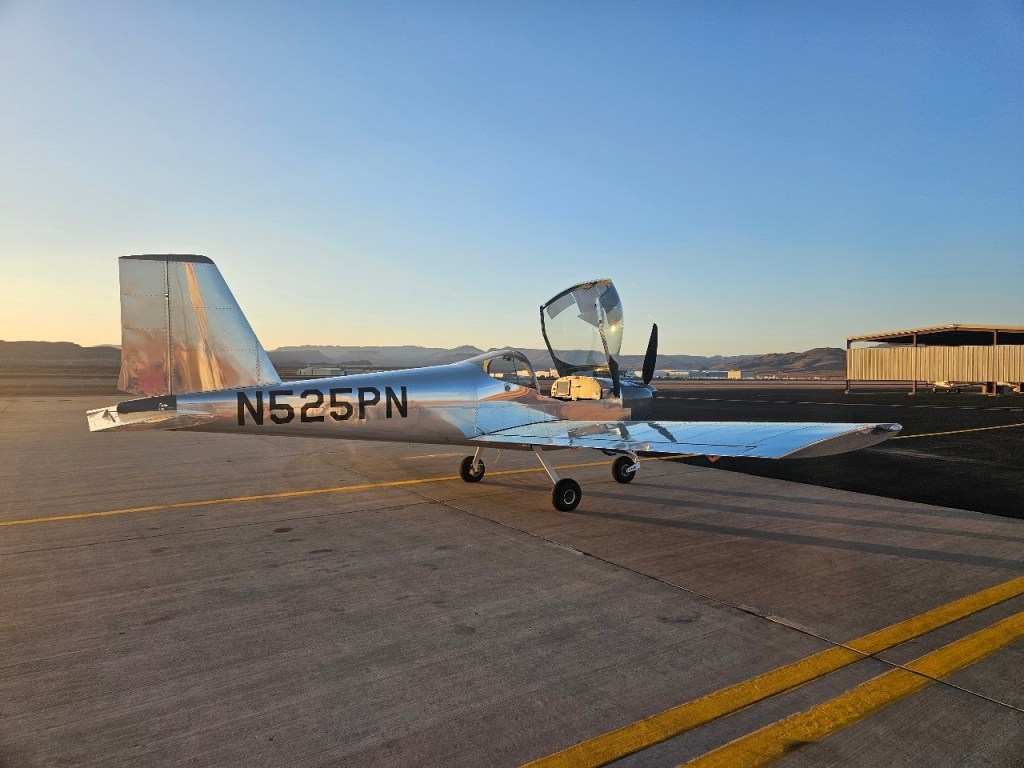
    An example I can use is when I first took possession of the RV-12, I made a stop in Henderson, Nevada and we happened to also get breakfast there. By the time we needed to take off we had to be very expedient with our takeoff times because the engine coolant was heating up very fast while we were on the ground and not a lot of air (even though the propeller was moving a lot of air) was passing through the radiator during the taxi sequence. We managed to get off the ground and as we were climbing the coolant temperatures did come down but because of the heat our climb performance was really sluggish. If we had to take off later in the day, I would have strongly considered staying overnight in Henderson and then taking off early in the morning before the sun came up.

    But I digress, Lake Havasu is a absolutely wonderful place to fly to but I would strongly recommend flying early in the morning during the summer or outright just waiting out summer because its still close to or over 100 degrees Fahrenheit at night most days during the summer which is miserable to fly in as well as not stellar for performance.

    The airport is located on the northside of the city and features a wonderful FBO and restaurant attached to the field. The Havasu shopping outlets are located directly across the street from the airport and rental cars are available directly from the FBO for $15/hour. The taxiway layout of the field is a bit interesting with parallel taxiways and the Charlie taxiway being set aside for use almost exclusively by helicopters, so make sure your taxi calls are accurate prior to moving outside of the ramp area or taxiing from the runway to the ramp area.

    One thing of note is that Havasu Air Service is the only FBO open on the field, the Foreflight map shows Havasu Air Center located on the north side of the field but this is not correct, the Air center has since moved into where the executive terminal was and the hours are 0800-1400 everyday which was posted on the door of the FBO.

    While the interior is plain, its very cozy and inviting, the FBO staff are extremely friendly and will happily meet out outside your aircraft no matter how small or big it is. They will happily offer a ride from your aircraft to the terminal gate.

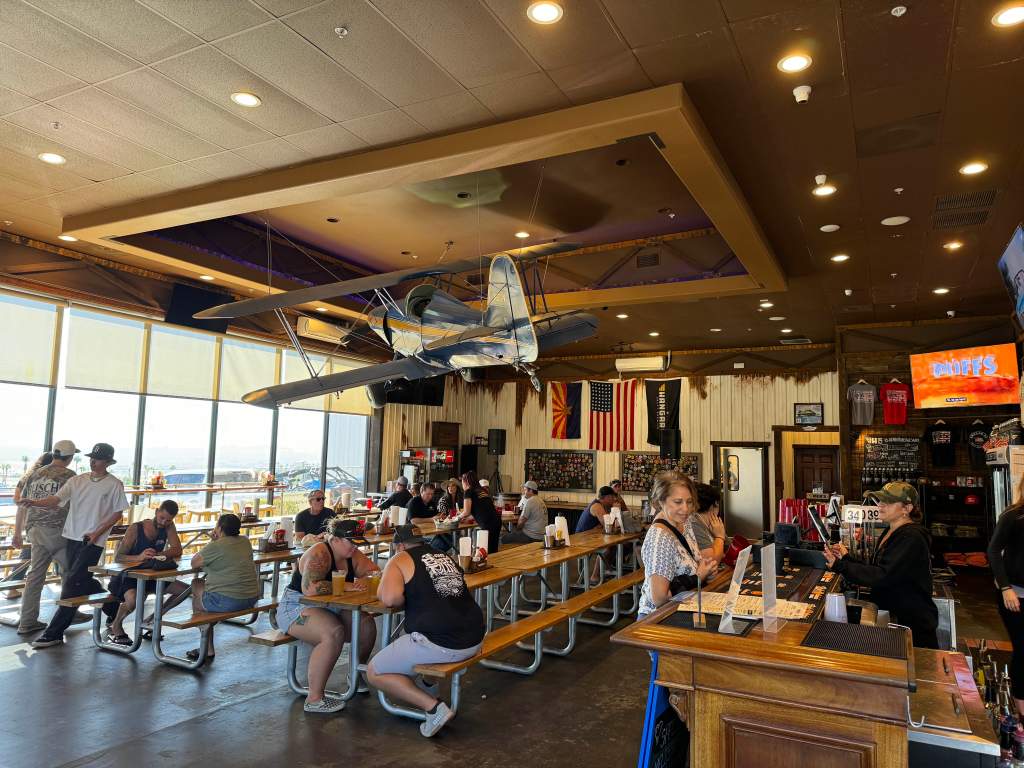
    One of the major attraction of Havasu Airport is Hangar 24 Bar & Restaurant which is directly attached to the airport and is easily accessed just outside of the main gate. Absolutely, highly recommend stopping here even as a primary destination for your $100 hamburger fix. Even if you are not flying in and are on vacation in Havasu, this is a go to destination well worth driving out of the way for. Its great food, good prices, a wide tap selection, absolutely wonderful atmosphere, and great people running the place. A 10-out-of-10 stop. Another point is that military traveling through can eat for free through the meal vouchers they offer which are graciously donated through the patrons of Hangar 24.

    Even on a lazy Sunday, its busy but the food comes out fast and hot, and its great eats. Hangar 24 also offers happy hour all day Sunday. If I wasn’t flying later, it would have been a great way to top off the day.

    Overall, Lake Havasu is a great place to both make a primary destination and a stop if your heading eastbound or heading to Vegas from the west coast, or a great place to overnight if you’re coming from the East. This is a strong contender for aviation destinations in the southwest that punches well above its weight being in close proximity to Las Vegas but without the massive hassle of entering Las Vegas airspace. there are also several marine boating events at Lake Havasu, which means the ramp can get a bit busy with jet traffic but don’t let that scare you, the FBO staff will treat you like a million bucks no matter how small of a plane you come in with!

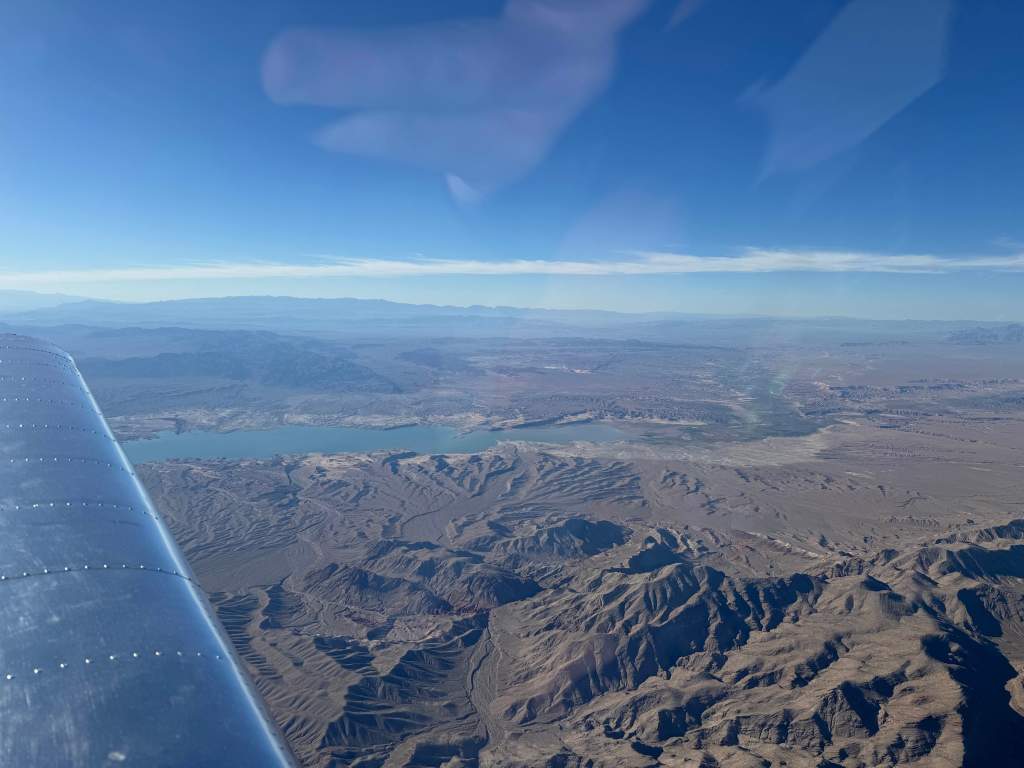
    The View coming home!

  • During the 2025 EAA Airventure Oshkosh event, the FAA presented its final rule of the Modernization of Special Airworthiness Certification, better known as MOSAIC. After over a decade of collaboration between the Experimental Aviation Association and the Federal Aviation Administration, MOSAIC was ratified on July 22, 2025.

    MOSAIC represents a massive step forward for the general aviation industry by greatly expanding the privileges of Sport Pilot Certificate holders, expanding the performance limitations of Sport aircraft, expanding the privileges of Light Sport Repairman Certificate holders, and also expanding the privileges of existing and future aircraft in the Sport category. This massive step forward coincides with the rapid advancement of technologies in recent years, many of these technologies would vastly benefit aviation but implementation has been very, very slow due to the regulatory and financial burden of applying those technologies on existing certified aircraft. The FAA’s rational to pass the final ruling of MOSAIC was to foster the growing sector of Sport Aircraft and allow the technological advancement to be implemented into newer aircraft with less red tape and no compromises on existing safety practices.

    MOSAIC has two specific dates when the rules added become live, this was to allow flight instructors, current pilots, and aircraft manufactures time to make adjustments to understand and comply with the new rules. Starting October 22, 2025, the new rules for Sport Pilots and Light sport repairman certificate holders take effect. Starting July 24, 2026 The new rules regarding specifically sport aircraft will take effect, this is to allow ASTM international (the body that creates the consensus standards for Light-Sport aircraft among many other industry standards) to update the standards to reflect the new performance limitations implemented by MOSAIC.

    The EAA presents a easy to read and understand bullet point list of the new privileges that are enjoyed by Sport Pilots and Light Sport repairman certificate holders Here.

    The Full 717 Page Document published by the FAA can be read Here. The majority of the 717 pages is commentary response by the FAA to questions posed during the public comment period, the verbatim changes to the laws can be found in Section V.

    One major change is allowing Sport Pilots certificate holders to fly normally certified aircraft with up to four seats so long as their clean stall speed is below 59 Knots Calibrated Airspeed. This massively opens up the aircraft available to Sport Pilot certificate holders as before MOSAIC they were limited to only Light-Sport Aircraft, Experimental Light-Sport Aircraft, and Experimental-Armature Built Aircraft that fit within the old definitions of a light sport aircraft. Starting October 22, 2025 someone whom holds a Fixed-Wing Sport Pilot Certificate will be able to fly any fixed wing aircraft with the following parameters:

    Allows Sport Pilots and those operating under Sport Pilot privileges to fly any aircraft (Sport Pilot Eligible), regardless of the aircraft’s certification basis

    • Utilizing a current and valid driver’s license in lieu of an FAA medical or BasicMed
    • With a clean stall speed (Vs1) of 59 KCAS or less (no maximum weight)
    • That has up to 4 seats (limited to two occupants)
    • That has a controllable pitch propeller and/or retractable landing gear with appropriate training and endorsements
    • At night with appropriate training, endorsements, and either an FAA medical or BasicMed

    As quoted from the EAA

    There is a large number of aircraft in the current registry of certified airplanes that have always fit well inside of the new parameters and even the old parameters of a light sport aircraft but if you held a Sport Pilot Certificate, you would not be allowed to fly them because they are in the Standard airworthiness category. What the FAA has done is allow a wider market of both pilots and aircraft to be available. A Sport Pilot certificate holder will be able to fly aircraft as large and complex as a Cessna 182RG so long as they have the appropriate training and endorsements. For aircraft manufactures, this opens up a wider audience that they are able to sell aircraft to. For Sport pilots this opens up their aircraft options on both the new and used aircraft market.

    Something less talked about is what this also means for existing Private, Commercial, and Airline Transport Pilot Certificate holders. You can operate under Sport Pilot privileges when you hold a higher level certificate using only your current and valid drivers license and associated limitations in lieu of an FAA Medical Certificate or BasicMed limitations, so long as you have never been denied a FAA medical.

    This opens up the doors for people that have had a medical certificate in the past and hold a Private or Commercial certificate but never re-upped their medical after July 6, 2006 but were never denied their medical either. Sometimes people have a life change that takes them away from aviation and they want to get back in as a hobby rather than a carrier change. When coming back after a long hiatus from flying you should always get training and a flight review to make sure you back up to speed with your skills and knowledge.

    Sport pilots are also allowed to now operate aircraft at night with appropriate training and endorsements, but they must hold a current FAA medical Certificate or be operating under BasicMed to do so. The FAA chose this option due to the increased risk factors of flying at night but they have stated they will review the requirement in the future to see if it is appropriate to continue requiring an FAA medical or BasicMed for night flight.

    For holders of Light Sport Repairman Certificates, they also will enjoy expanded privileges with MOSAIC. Starting on the same October date, those that hold a Light Sport Repairman certificate with a maintenance rating, will now be able to work on all new S-LSAs entering the market, perform annual condition inspections on all Experimental Amature-built aircraft, and make minor alterations and repairs to S-LSA aircraft without approval from the manufacturer. (similar to standard repair process of a traditional Standard airworthiness certified aircraft and a traditional Airframe and Powerplant mechanic) Prior to this, minor alterations of S-LSA aircraft had to be approved by the manufacturer and in some cases this was either impossible because the company went defunct or the company would outright never allow any alterations out of fear the aircraft would lose its S-LSA status with the FAA in the United States. A more detailed list can be found on the EAA Website outlining the expanded privileges.

    Expands scope of aircraft eligible for Light Sport Repairman ratings and creates pathway for non-builder owners of amateur-built aircraft to perform their own annual condition inspections.

    • Light Sport Repairmen with a Maintenance rating (LSRM) can work on all new S-LSAs entering the market (not eligible for legacy standard-category aircraft such as Cessna 172s)
    • LSRM certification course changed from specific three week duration to a requirements-based curriculum that should be roughly the same length
    • LSRMs may perform annual condition inspections on all Experimental Amateur-Built aircraft
    • Light Sport Repairmen with an Inspection rating (LSRI) may perform annual condition inspections on any Experimental Amateur-Built aircraft that they own (requires at least a two-day course)
    • S-LSA manufacturers’ Safety Directives become advisory-only, not mandatory (FAA Airworthiness Directives are mandatory if applicable)
    • Minor alterations and repairs may be performed on S-LSAs without manufacturer approval

    One of the major changes that will come in July of 2026 is the expanded limitations and privileges surrounding Sport Aircraft. Prior to MOSAIC, Light-Sport aircraft were very limited to the maximum weight, speed, stall speed, Seat count, and propulsion type. With the new changes I hope to see far more advanced personal travel, recreational, and dedicated training aircraft to come to market in the next decade. MOSIAC drastically slashes the certification costs of new aircraft in the Sport Category by allowing manufactures to use ASTM consensus standards in conjunction with FAA oversight. MOSAIC also expands the categories of aircraft that can be built in the Sport Category to now include Helicopters, Gyrocopters, and Powered Lift aircraft.

    The EAA Outlines the changes as follows:

    Allows larger, safer, and more marketable aircraft to be built as Special and Experimental Light Sport Aircraft (S-LSA/E-LSA)

    • Allows for performance-based criteria to define eligibility, including higher speeds (up to 250 knots) and larger aircraft with features like retractable landing gear and constant-speed propellers
    • Allows airplanes with up to 61 KCAS stall speed in the landing (VS0) configuration. (Removes the previous 1,320 lb maximum takeoff weight restriction)
    • S-LSA/E-LSA airplanes may have up to four seats (however, Sport Pilots and those exercising Sport Pilot Privileges are still limited to one passenger)
    • Removes limitation on number and type of propulsion systems (Sport Pilots are limited to one engine)
    • Allows certain S-LSA aircraft to conduct aerial work operations when flown by an appropriately-rated pilot

    One example I routinely use in personal conversations when talking about technology in aviation is that most aircraft engines can be traced back to their original designs in the mid 1930s and that very little has changed from those original engine designs. This has been done because the engines are known to be reliable even if that leaves a lot of efficiency on the table. Many modern technologies like electronically controlled Fuel and spark timing has been common in the automotive world since the 1980s and we’ve seen the massive benefit of reduced emissions, higher power output, and reduced fuel consumption from it but this technology is very rare in the aviation world. Full Authority Digital Engine Control or FADEC technology exists for aviation engines, but implementation has been seldom due to the massive cost increase of getting the systems certified for legacy engines. Despite the gains of FADEC such as lower fuel consumption and reduced pilot workload, many aircraft owners have a hard time justifying the additional cost of retrofitting the systems because the return on investment is miniscule in the fuel savings, its only a worthwhile addition to someone looking to buy a new aircraft. The Experimental and Light Sport aircraft world has been enjoying FADEC controlled engines for the past decade or more depending on who you ask.

    The prime example of a FADEC controlled engine versus a carbureted engine would be the Rotax 912 series of engines. Rotax offers the 912 in both a FADEC controlled option and a Carbureted version. The 912S and the 912iS are both 100hp engines but the difference in performance is very noticeable. At 7500 ft. MSL the carbureted 912S at a cruise power setting of 5000 RPM consumes on average 4.7 Gallons per hour, the 912iS at the same rpm setting consumes 3.8 gallons per hour on average. That’s about a 20% difference in fuel consumption just in cruise, but where the performance difference is most noticeable is during the climb phase of flight. The Carbureted version of the 912 during the climb phase of flight loses power significantly faster with the increase of altitude and the FADEC controlled 912iS maintains its power better with the variable spark timing as the air gets less dense with altitude, meaning you get to your desired altitude faster, you are able to fly just a bit higher than the carbureted version, and you burn significantly less fuel during the climb phases of flight.

    Looking forward we should expect to see vastly more efficient and technologically advanced aircraft in the coming years and more people should be able to get into the aviation world with the reduced cost of the new aircraft over the legacy options.

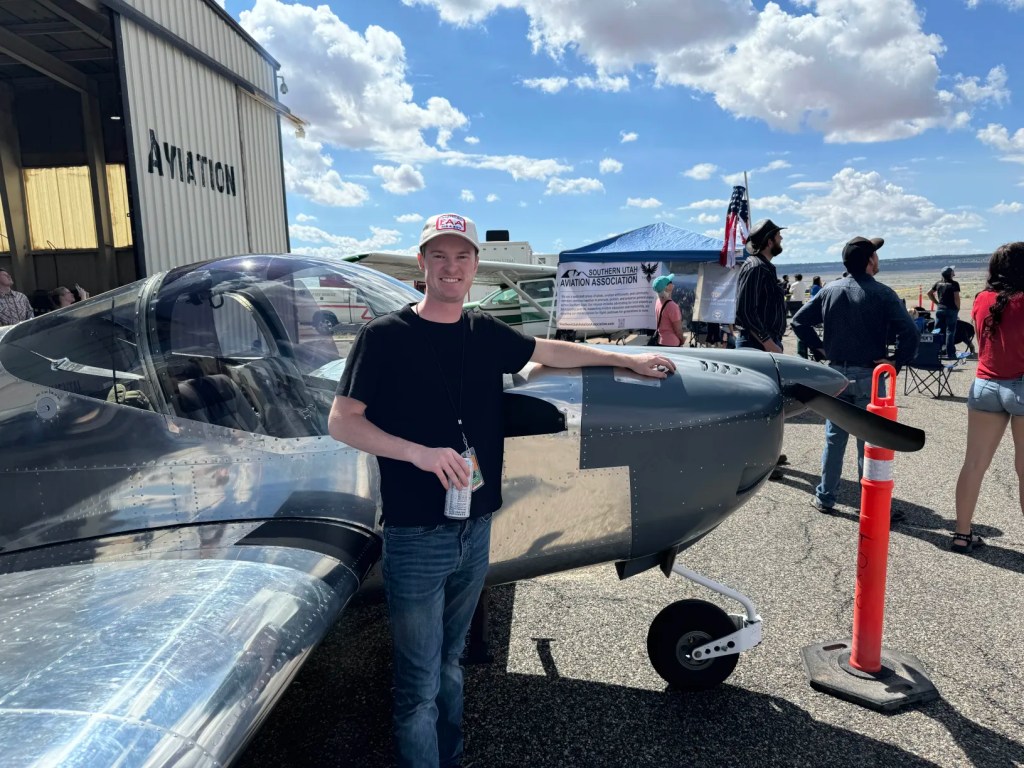
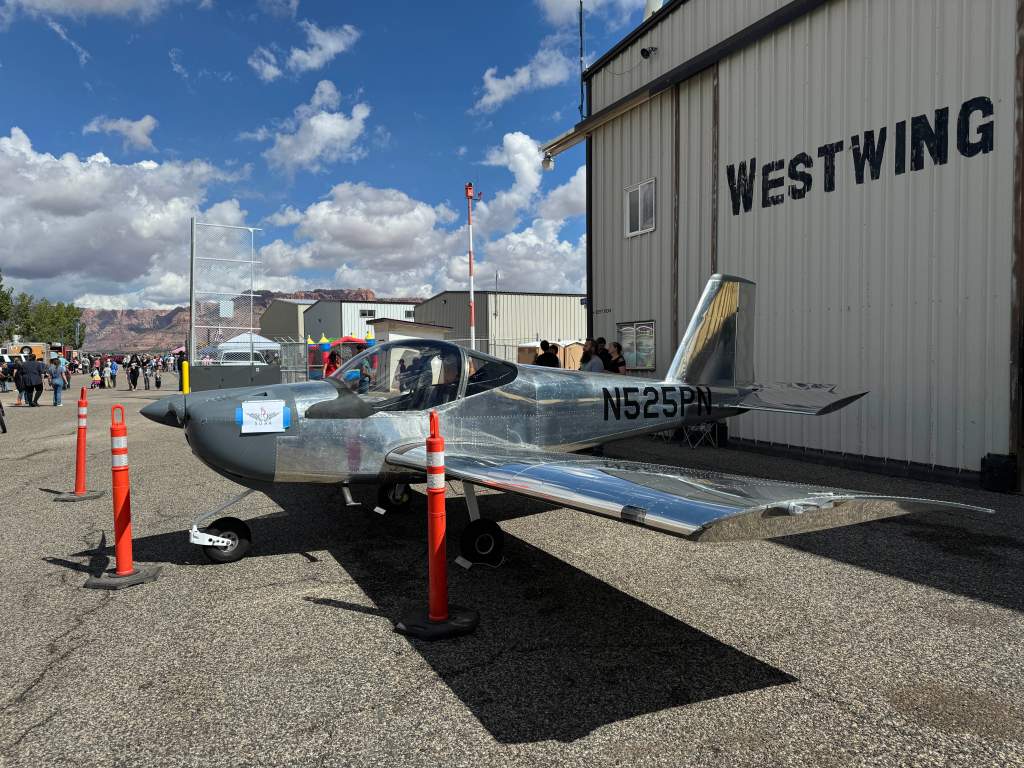
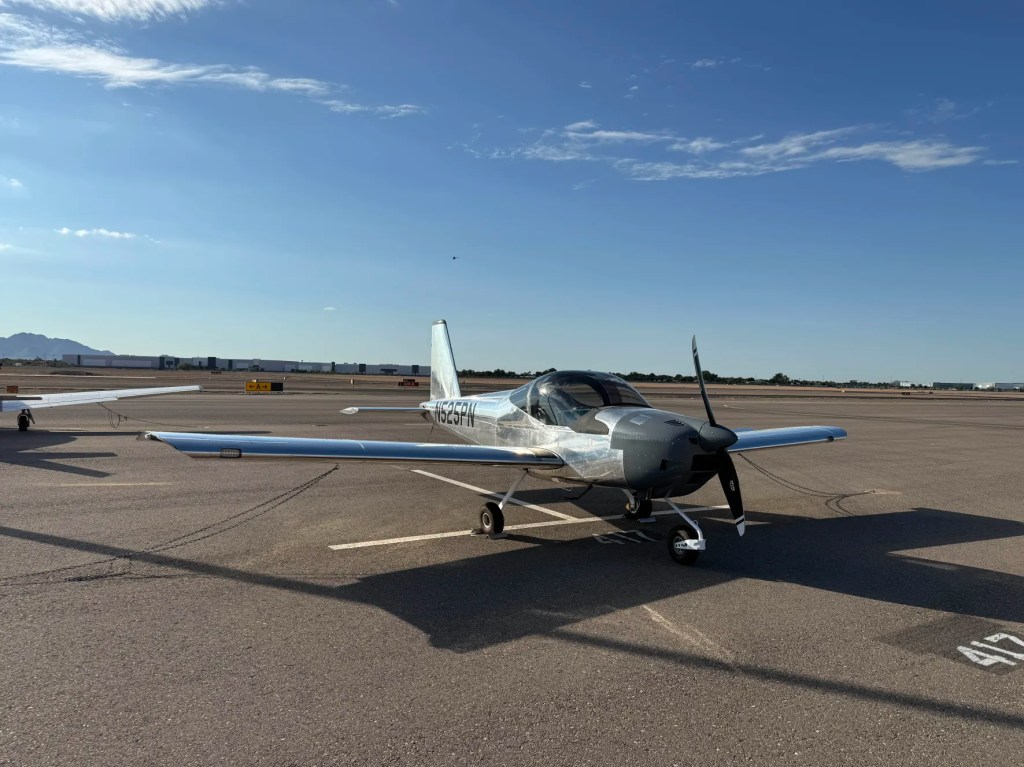
  • This trip was very interesting in that it was a last minute change to have the RV-12 on display in association with the Southern Utah Aviation Association and Experimental Aviation Association Chapter 936 of Saint George and Hurricane, UT at the Colorado City, AZ airshow. One of the EAA attendees had a last minute change and was unable to attend so he asked me if I was able to bring the RV-12 in his place for static display.

    The RV-12 served as a wonderful display of Experimental Aviation and I had several wonderful conversations with people there wanting to know more about experimental aviation.

    I strongly urge those in the Southern Utah region to join both the Southern Utah Aviation Association to stay up to date with local changes as well as advocate and communicate with the local area on some of the proposed ordinance changes in the area, as well as the Experimental Aviation Association to help support aviation and promote the industry to younger generations to foster the talent so desperately needed in all aspects of the aviation industry.

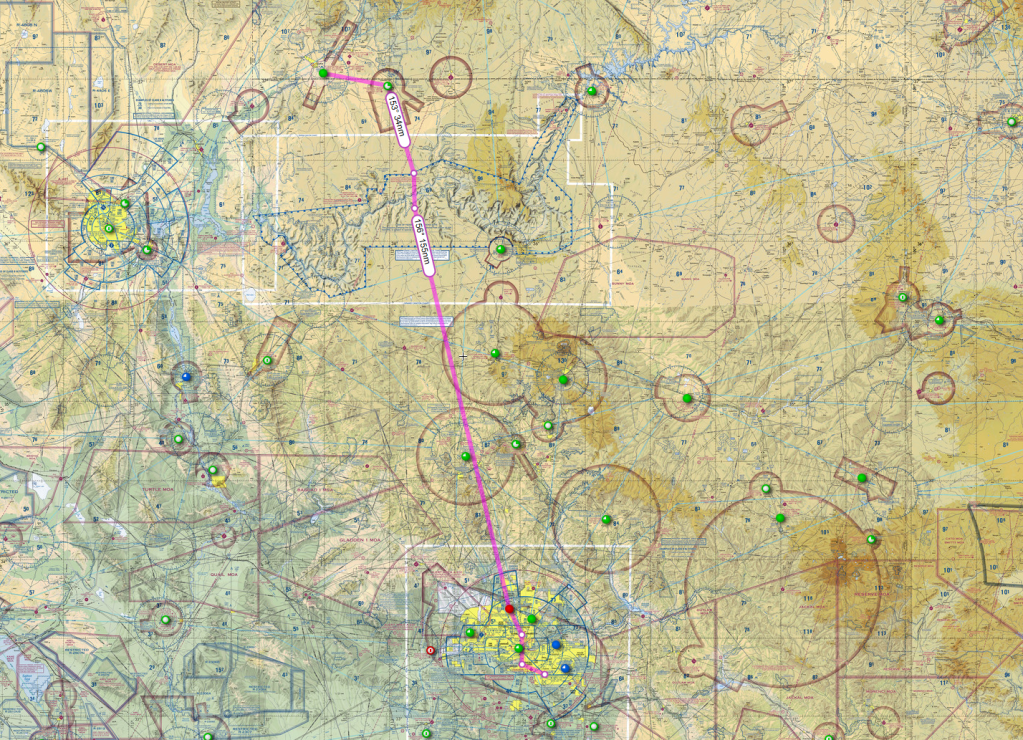
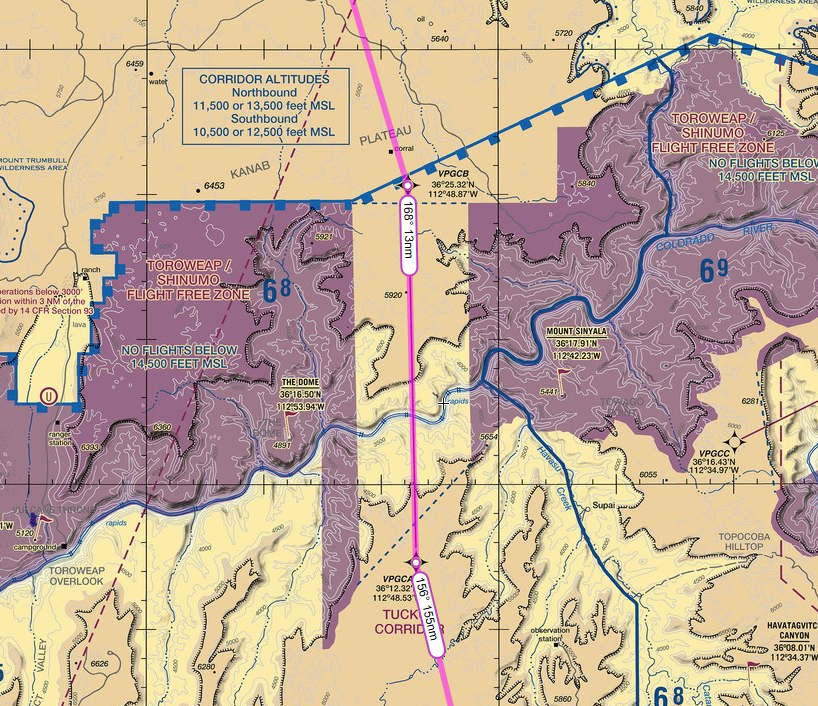
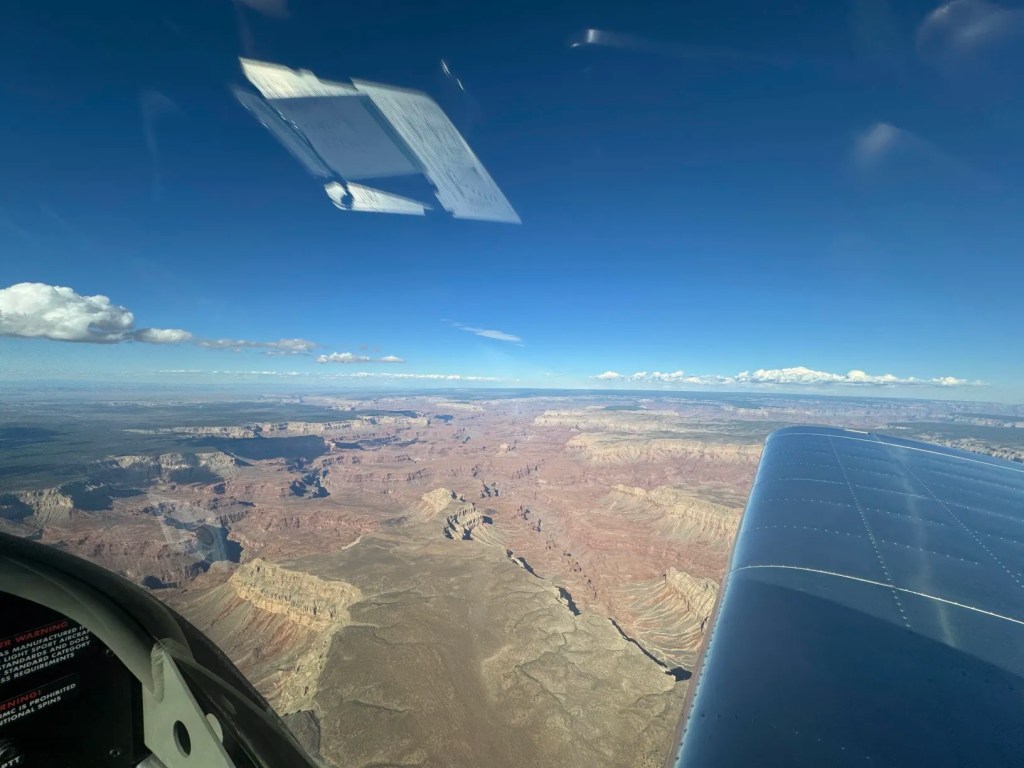
    After the airshow had ended, I had already planned a trip down the Phoenix, AZ to visit a friend for the weekend. Flying down to Phoenix, AZ from the Saint George area is quite a bit different as it requires either flying over the Grand Canyon via a VFR corridor with special rules that have to be followed or to fly around the Grand Canyon by flying east over to Page, AZ and then heading south to Phoenix. This choice depends on the cloud ceilings and the performance of the aircraft for the day, if the cloud bases are below 11,000 ft. MSL or if the day is hot enough to prevent climbing up to 10,500 ft. MSL, then I would have to fly around the grand canyon and add about an hour of extra flight time to get to Phoenix. But the conditions of the day allowed me to fly the VFR corridor and save the time and fuel to get to Phoenix.

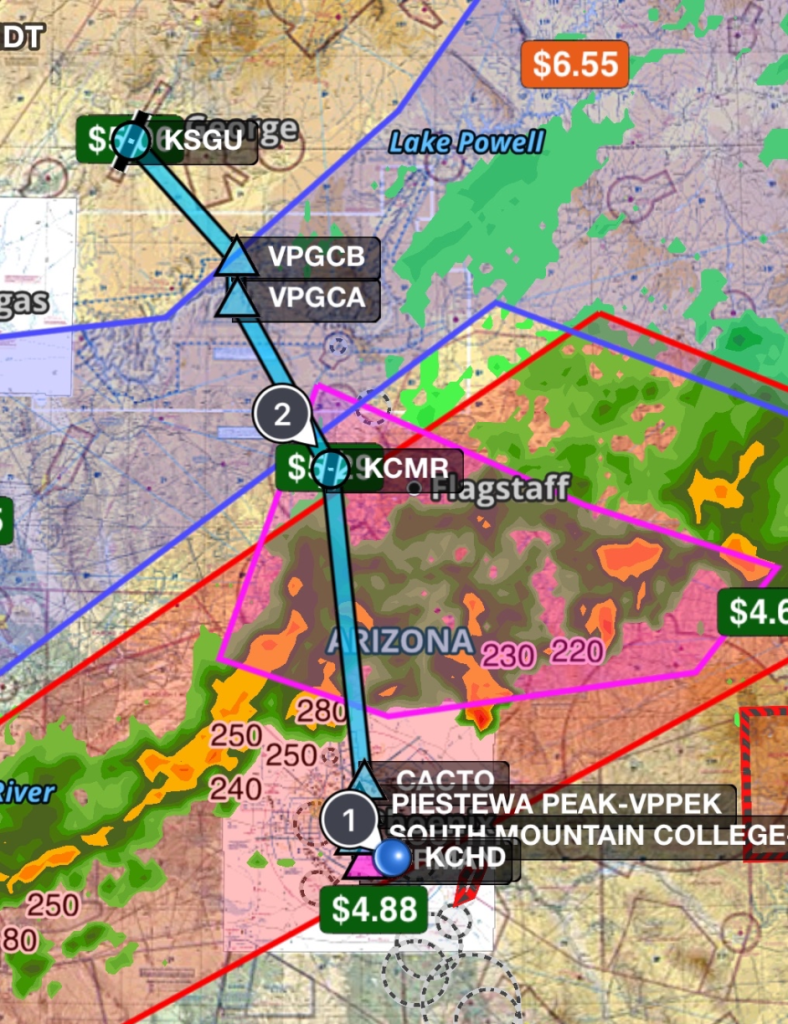
    This is the route that was flown for the day. After Getting out of the Grand Canyon airspace I descended back down to 9,500 ft. MSL in compliance with VFR flight rules about flying on an an easterly heading (flying a heading between 360-179, you will fly on the odd thousands plus 500 ft., 180-359 on even thousands plus 500 ft.) When flying through the Grand Canyon, there are extra steps when flying South or North.

    We can see here flying through the Tuckup Corridor there’s specific altitudes you must adhere to depending on if you are heading North or South and you must enter and exit at those specific waypoints before continuing on your way.

    Throughout the flight I had picked up VFR flight following from Los Angeles Center just before entering the grand canyon airspace and they provided additional traffic and weather information advisories and handed me off to Albuquerque control for a short bit before then handing me off again to Phoenix Approach Control as I got closer to Phoenix.

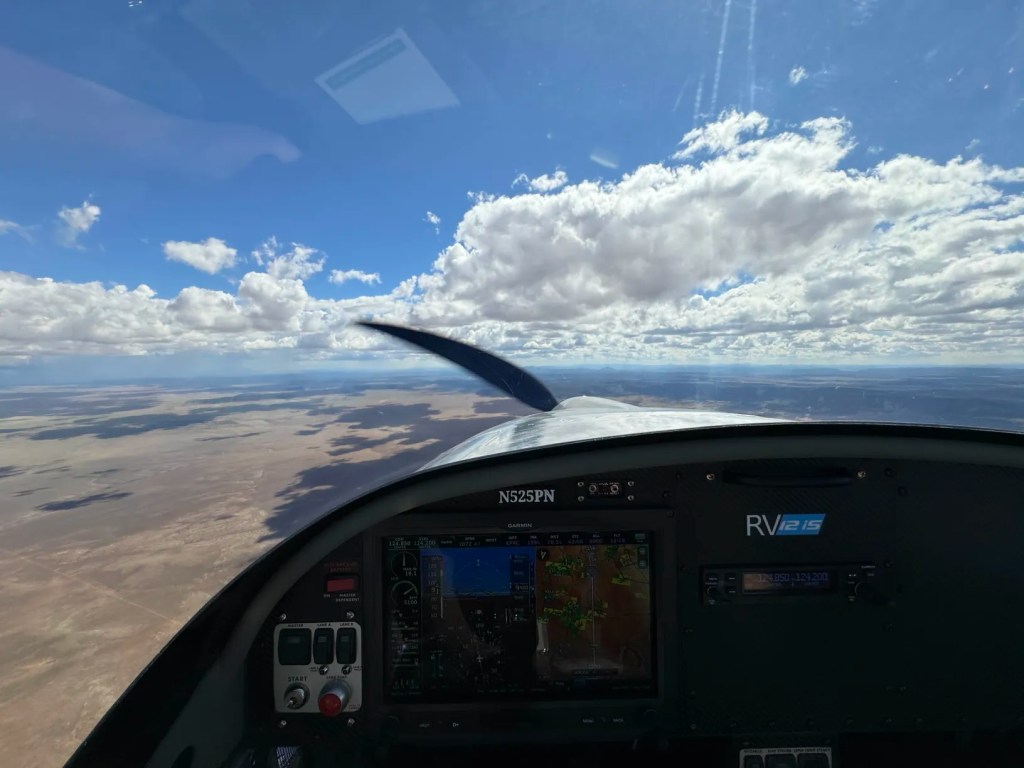
    One note that most people are not familiar with as well as some pilots is that radar weather information can be outdated in a matter of minutes and you will receive advisories from ATC that may not be applicable to what’s happening right in front of you. This is because ATC cannot physically see what you are seeing and can only really see what the radar sees. In this case I had received an advisory that there was “Severe to Extreme precipitation 10’o clock 5 miles ahead and Moderate to Severe precipitation 12 o’ clock 10 miles ahead extending for 5 miles”. The reality was that the storms they were describing had already moved east a significant amount and when looking at the weather data I was receiving it was clear that the weather radar data was outdated by a few minutes and storms in the desert region can quickly develop and dissipate in a matter of minutes.

    Here you can see the difference of what the weather is directly in front of me vs what is being shown on the panel. On the panel you can see the radar depicting moderate precipitation but directly in front of me is otherwise clear.

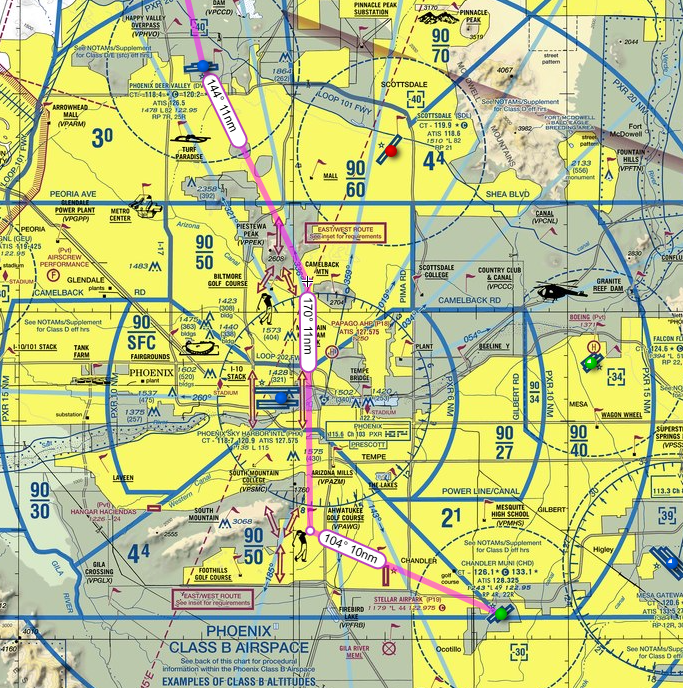
    As I got closer to Phoenix, I was handed off from Albuquerque Center to Phoenix Approach and I requested a southern transition through the Bravo airspace to get a more direct route to Chandler. Phoenix Approach then gave the instructions “cleared through the Bravo, Fly direct to Deer valley and then are you familiar with the eastern transition?”

    I replied, “Cleared through the Bravo, Direct Deer Valley, and no I am not familiar”

    Phoenix, “Roger, uhhh, you see the two peaks at your 11 o’clock, fly between those peaks and expect vectors”

    Even with looking at the Phoenix Terminal Area Chart and reading the instructions, the depiction on the map looks like you fly directly over the arrival end of the runways. Which if you read the instructions has you fly between the approach end and the I-10 but if you’re not familiar with the area may still not make sense, which is why I requested the vectors because I’m not familiar with the area. Air Traffic Control is there to help you not get you in trouble.

    This is the actual route flown.

    Once I was through the transition, Phoenix then instructed me to resume own navigation which at that point was just direct to Chandler Municipal and Phoenix also gave me the tower frequency to change over to. I had tuned in for Chandlers weather info frequency when I was still north of Deer Valley. When arriving at any airport you must get weather information prior to arrival, and with most towered airports there is a specific identifier that comes with the weather information to ensure that you have the correct information upon arrival. So when arriving you will tell the tower you are inbound with, in this case with, “Chandler tower 10 miles west of the field, inbound for landing with information Tango”. As the weather information is updated, the Identifier moves through the alphabet with each update.

    Landing at Chandler Municipal is a very interesting. It has parallel runways but they’re significantly staggered by hundreds of feet so you must pay attention to what runway you are cleared to land on and make sure that you enter the correct traffic pattern if tower tells you to enter either on the Base leg or Downwind of the respective runways. If landing on 22 Right, you can point yourself at the Numbers of 22 Left and that will line you up very well for the base to final legs. Taxiing through Chandler is also very easy if you land on 22 Right as most of the runway exits put you right where the entrances of the parking ramp are. Parking at Chandler is free and there’s plenty of tie down space for transient traffic even among the multiple flight schools there.

    Flying back on Monday was a bit of a challenge and I had to wait for a significant storm to move east before it was clear enough to head back home. I ended up going to the Hangar café on field while waiting and they serve a very good burger there for a very reasonable price. Highly recommend if you need to eat and stay on the field.

    At around 2 PM local time I was able to take off and used that east transition to the north this time. I used the exact same route flying back home and the weather north of Phoenix was clear and the cloud ceilings were plenty high enough to traverse over the grand canyon again.

    If you ever get a chance, I highly recommend taking a flight over the Grand Canyon, words cannot describe the scale of it.

  • Recently I had the opportunity to interview Shane Losee, prior Chief Pilot of Skywest airlines and current pilot for Southwest Airlines. Shane offered a wealth of knowledge into the industry as well as some commentary about what created the current situation where pilots need to build time to qualify for an Airline Transport Pilot certificate. I delved a bit into Shane’s history like what got him into the aviation industry, why the airlines, how did he build time to get there, what makes someone a good candidate for the airlines, as well as some other aspects that younger pilots getting into the industry face.

    The following will be a series of questions and paraphrased quotes responding to those questions.

    What got you into the aviation industry?

    “What got me into the aviation industry is when I was a kid, my dad owned an aircraft maintenance shop and operated a flight club, So I was always around aircraft and initially got my A&P (Airframe & Powerplant) certificate as an aircraft mechanic”

    When did you decide to move into the airline industry specifically as a pilot?

    “So initially I went to Skywest as an aircraft mechanic and while I was there I had several mentors that were pilots strongly recommend that I also become a professional pilot because I also had my Certified Flight Instructor certificate and due to some life circumstances it was the right time to make the jump into the pilot sphere.”

    What did you do to build time in order to get to the airline level?

    “I mostly used my CFI certificate to teach other people how to fly in order to build hours, but I also flew with Americheck flying freight part time in a Cessna 402 [which helped accrue multi-engine time]”

    What are your thoughts on the common pathways that pilots use to build time?

    “During my time as the Skywest Chief Pilot, usually the best candidates were CFIs that built time teaching people or prior military because those paths ways set a very strong baseline for standards. When we got a handful of people that did Survey or Pipeline patrol some of them developed bad habits that translated into having a bit of a challenge in the training environment. So if you do plan on going to the airlines, pick one and use their SOPs as a baseline standard to hold yourself to.”

    “Another thing is that buying an airplane is a great way as well to build hours but again you still want to hold yourself to a high standard and go do things that challenge you, Go fly long cross countries to unfamiliar places, go fly to towered airports, get additional ratings, and continue to learn.”

    During this time building period, do you think many young pilots end up missing the forrest for the trees so to speak?

    “Absolutely, a lot of people when they finish their commercial license want to go to the ATP level right away rather than taking that time to really learn more and gain that experience that will help them in the airlines if they plan on going there. Something that I ended up missing when I got to the airlines was flying the smaller General Aviation aircraft, and I eventually bought a Cessna 150 down the road to enjoy time in the smaller airplanes before upgrading to what I have now.”

    Expanding on that question, do you think there is a fundamental misunderstanding of how the industry worked before 2009 between the younger and older pilots.

    “2009 was an incredibly odd time both with the world and the industry and there definitely is a misunderstanding of how the airlines hired before 2009. Most people were not getting hired with fresh commercial certificates at regional airlines hardly at all, such cases were extremely rare. There were some regional airlines that would hire with less than 1500 hours but most people were getting hired at the airlines closer to 4000 hours. When the Colgan air crash happened in 2009 it became highly politicized and there was a strong push from the families of those involved as well as university lobbyists to have the 1500 hour law passed. It was a very odd time, 1500 hours alone doesn’t make someone a professional and it somewhat messed up the existing pathways for a lot of young people to get into the industry. Again, you really need to hold yourself to a high standard if you intend to go to the airline or even a charter company because holding yourself to a high standard, using grounded checklist flows, and making professional calls is what makes you a good pilot.”

    Is an R-ATP qualified degree or more traditional degree more worthwhile in the long run?

    “When it comes to the airlines, Seniority is everything. Its possible that while you are pursuing a degree you may be front loading yourself when building hours and getting your foot in the door would be a better pathway. I’d recommend that you pursue your degree on the side if you intend to go to the major airlines that require it because its possible while you are pursuing a degree full time instead of flying, you end up getting passed up during the hiring periods because you don’t qualify hours-wise. Having a degree wont hurt you but you want to be as efficient as possible while building your hours and gaining that experience.”

    Do you think that the Post-COVID hiring has put an unrealistic expectation for young pilots just getting into the industry?

    “Absolutely. During the post-COVID hiring boom we saw some Younger-than-25 pilots with R-ATPs going to dream major airlines fresh out of the gate right at the minimum hour requirements, some with only high school GEDs which is pretty much unheard of. Its definitely set some unrealistic expectations about the hiring prospects of the industry, and now [in 2025] we’re seeing the industry return back to a normalized hiring pace. Every now and then we’ll see airlines waive some of their hiring requirements [like a degree] if they really need pilots but this doesn’t mean you should bank on those situation happening all the time. You should still work on getting a degree at some point.”

    “The reason we’re seeing the hiring prospects return to that ‘normalized’ state is mostly because of aircraft manufactures having trouble with their aircraft in recent years, between the Boeing 737 Max-8 and Airbus having trouble with their GE9X geared engines that grounded a lot of aircraft, that’s really what’s slowed down the hiring process as of late.”

    “You need to find a pathway that works for you, going to a flight academy can get you to the Airline minimums really fast but its typically very expensive going down that route, the college pathway is a bit slower but generally not as expensive, you can also go down the solo route in a part 61 flight school and you can go as fast as your drive allows you but you still need to work on getting a degree at some point while building up your experience.”

    Last question is more GA oriented, how do you see MOSAIC and its recent changes affecting the industry?

    “I think its going to be a great change. The new Sport Pilot certificate privileges are going to offer a very good stepping stone for some people if they’re not entirely sure if they want to go headlong into aviation as a career and they can still use a lot of those hours towards the private and commercial should they want to make that change in the future. When it comes to the aircraft side of the changes I think we’re going to see some very sleek and advanced aircraft come out in the near future that are a lot cheaper and should make for a very competitive market. More competition in this market as always a good thing.”Speaking with

    Shane is a wonderful experience, he has a lot of knowledge and insight into the industry with his experience and some very good recommendations and commentary for people looking to get into the industry. He will hope you the best of travels in your aviation journey and is more than willing to help others.

  • From new pilots to old pilots its hard to beat a short day trip to a close by airport, take in the scenery, get lunch, and just relax. A common day trip for many pilots that live in Saint George, Utah is to fly over to Page, Arizona to take in the scenery of Lake Powel.

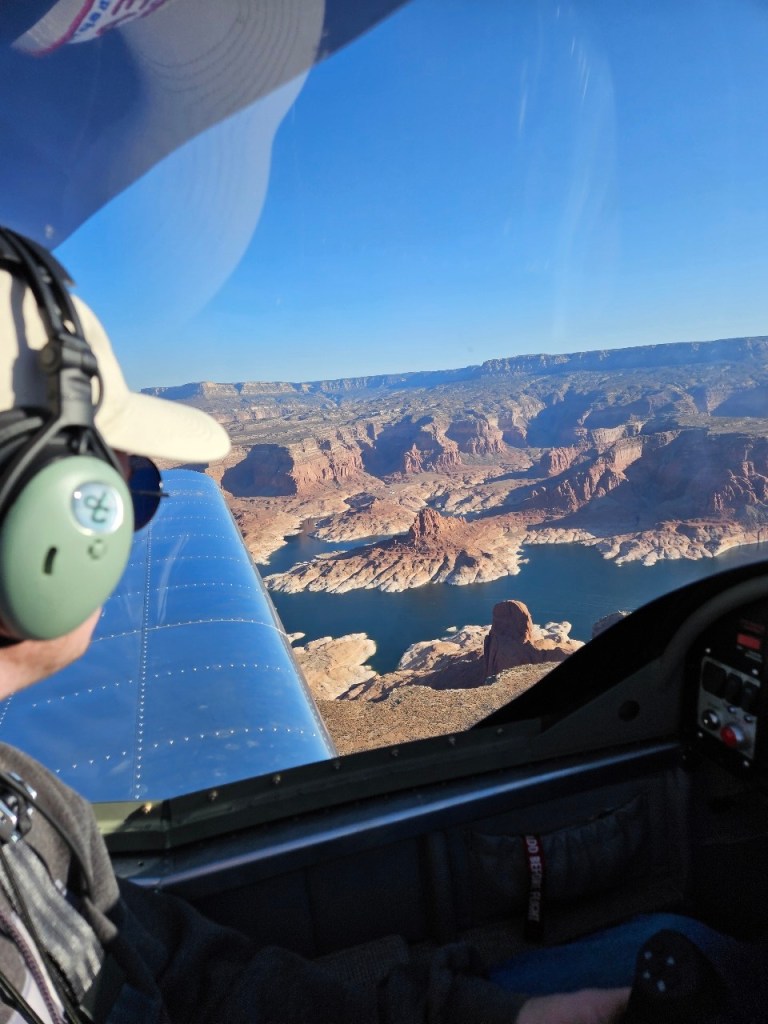
    Its truly quite difficult to fully take in the scenery of Lake Powel. The Lake is quite populated at this time of year as the summer heat is beginning to fade making standing outside more tolerable but just before winter sets in and then its too cold to enjoy the water. There were Houseboats and other personal watercraft spread throughout the lake.

    Saint George to Page is a 99 Nautical Mile Flight and offers amazing views and several other airports along the way such as Colorado City and Kanab which also makes this route very suitable for a student solo or for an introduction to flight training for a new pilot. Its advisable to take this flight early in the morning during the summer to avoid the thermals and mid-day turbulence over the desert. Be aware that because of the mountainous terrain its possible to encounter light to moderate mountain wave turbulence depending on the winds, again go early in the morning. Flying Higher to avoid the mountain wave is a great option but during the later summer months, be aware that its monsoon season in Utah and Arizona so there can be low level clouds and afternoon thunderstorms preventing you from flying above the turbulence or outright flying at all.

    The day that I went, there was little to no cloud cover in the morning and a favorable tailwind from Saint George heading east to Page. The RV-12is is perfectly suited for these short-hop scenic flights because of its bubble canopy allowing for almost unlimited 240 degree views. With the favorable tailwind, the RV-12 completed the morning flight in just under 45 minutes and burned under 5 gallons of fuel.

    There are a couple things to note about Page. There are a few commercial operations there like Grand Canyon Scenic Airlines, which operates between Las Vegas and Page offering both air tours as well as transportation to ground based tours in Page, and chartered flights for private individuals. Its not uncommon to see executive and cabin class aircraft, including small jets, arriving and departing. Its easy to Identify one of Grand Canyon Scenic Airlines planes over the radio with their call sign, “Canyon View”.

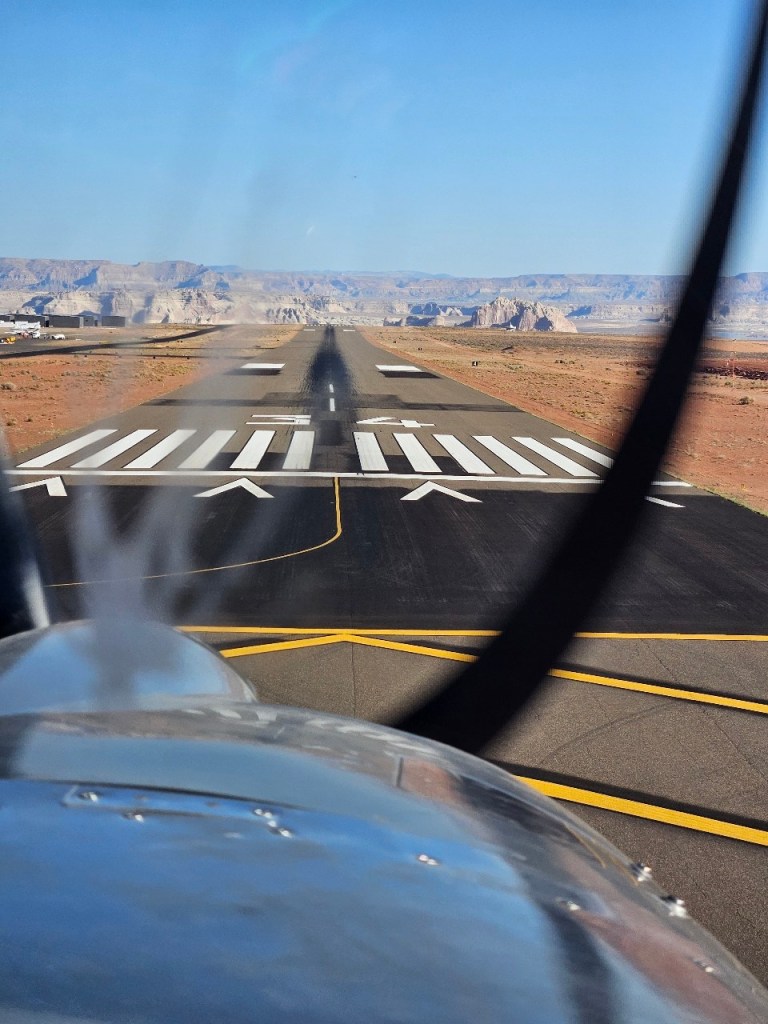
    Another thing to note is that when looking on the maps and charts, you will see that the designated runway is listed as 15-33, but upon actually arriving at page you can clearly hear and see that the physical markings on the runway is 16-34. With the current conditions of the day, you could hear pilots call out “Runway 34” as the runway in use. This is also reflected in the NOTAMs for Page as the runway has “non-standard markings”. There is also a permanent runway closure of runway 07-25. You cannot see most of the old runway as it has been built over with hangars and in case of emergency would not be an advisable place to land.

    For the RV-12, Page’s 5950 ft. long runway is way more than enough space to land and provides ample length if we had to abort a take off later in the day. In Light weight aircraft its easily doable, even on calm days, to exit the runway on taxiway A4, but it might be more practical to get off at A2 as that points you straight into transient parking and tiedowns and gets you away from jets that may want to get out of the executive terminal, Million Air Lake Powell.

    Here we can clearly see the Runway marked as 34, ahead of the displaced threshold.

    (mind the bug on the windshield)

    But that favorable tailwind in the morning turned into a stiff headwind just before noon, and clouds had begun to develop along our flight path back to Saint George. All of this occurred in just barely an hour because when we landed in page, we got a car and went into town for breakfast. By the time we finished eating I could see that cloud development had started west of Page which cut our stay a bit short as we wanted to get back to Saint George before any more significant weather had developed. While our RV-12is is mighty capable, it is not equipped for instrument flight rules nor is it allowed to fly through clouds per its limitations because it is a Light Sport Aircraft.

    For the flight back, I opted to climb significantly higher at 12,500′ MSL for a short portion of the flight to get away from the lower level desert turbulence but this proved to be a bit of a challenge because the cloud bases were around 10,000 ft. MSL and topped out higher than 12,500 ft. Thankfully the cloud development was not so significant that it stopped us from progressing. There were large enough gaps between clouds to maintain significant clearance and fly an almost straight line back to Saint George until we were over Kanab. Just past Kanab, cloud development was more significant and it was necessary to descend below the bases of the clouds. I opted to then begin a shallow decent about 3 miles west of Kanab to 8500 ft. MSL and once we were back over Colorado City another shallow decent into Saint George.

    Overall Page is a wonderful destination to fly to and offers ample scenery to boot. Page’s staff are friendly and there is a crew car available to pilots or an Avis rental for more long term use beyond just a few hours. Parking space is no issue, is very reasonable on pricing for overnight accommodation and there is no charge for transient parking for a few hours. Fuel prices are a bit higher but its full service only and there isn’t much else around that area. Page is absolutely worth the stop.